The Anatomy of a Polymer80 Frame: What's Really Under the Hood?
The Anatomy of a Polymer80 Frame: What's Really Under the Hood?
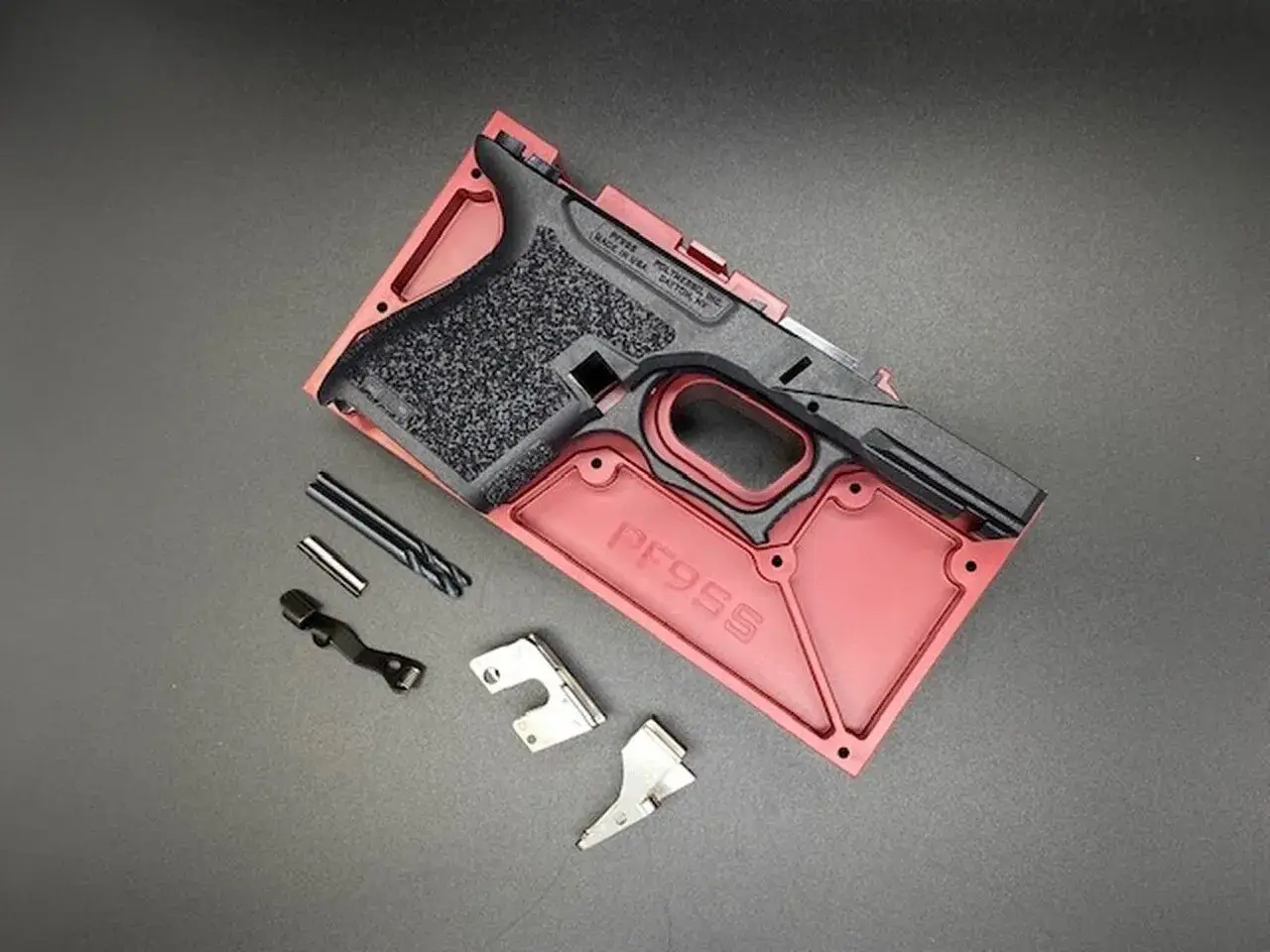
Open the box on a new PF940 frame and the first thing you'll notice is the weight—or lack of it. At roughly 4.5 ounces for a compact model, it's a fraction of a traditional steel frame. That's your first clue that the material science here isn't an afterthought; it's the entire foundation. The polymer isn't just a cheap plastic shell; it's a precisely engineered nylon polymer blend, reinforced with fiberglass, designed to handle the repeated shock of a .40 S&W or 10mm Auto without cracking or deforming. This is the core of what makes an 80% frame viable, and understanding it separates a successful build from a problematic one.
The Core Material: Reinforced Nylon Polymer
Let's cut through the marketing. Polymer80 frames are injection molded from a proprietary blend, but we can identify its base: a glass-filled nylon, most commonly a type like Nylon 6/6 or Nylon 6/12. The "glass-filled" part is critical. This means microscopic strands of fiberglass are embedded throughout the nylon matrix during production. This reinforcement is what gives the frame its structural integrity and heat resistance. You can feel it when you drill the trigger pin holes or mill the recoil spring channel—the material doesn't melt or gum up like cheap ABS plastic; it produces a clean, slightly fibrous swarf. This composite can withstand temperatures well beyond what a barrel will produce during normal firing cycles, ensuring the frame rails and fire control housing don't warp under stress.
Why Polymer? Durability, Weight, and Performance
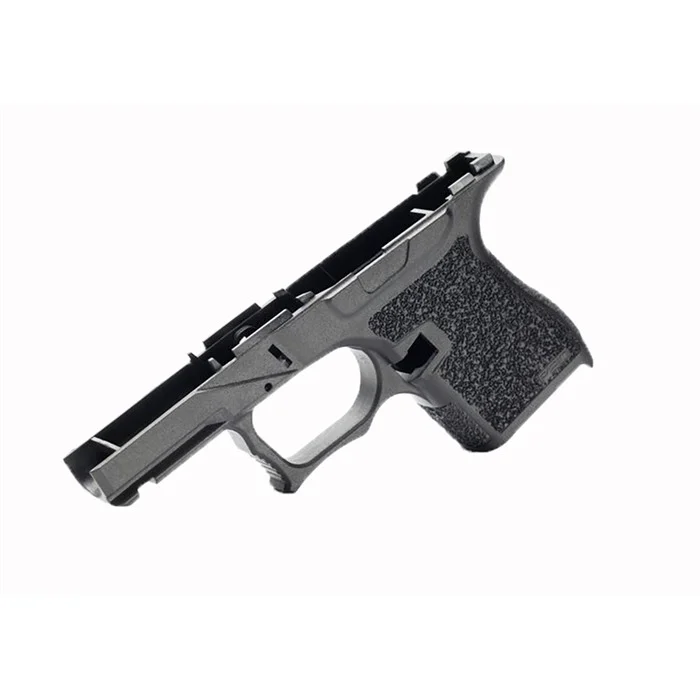
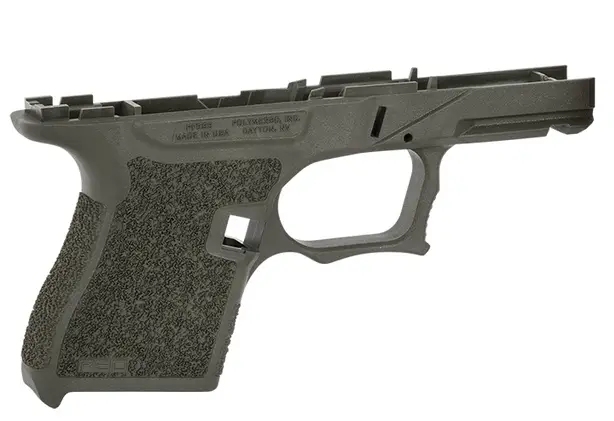
Skeptics ask, "Can plastic really handle a firearm?" The answer isn't just yes—it's that modern militaries and police have relied on polymer-framed sidearms for decades. The advantage is a superior strength-to-weight ratio. A Polymer80 PF940SC frame for a Glock 26 build is incredibly light, reducing carry fatigue, but the polymer's natural flex also absorbs and dissipates recoil energy differently than a rigid metal frame. This can translate to faster follow-up shots. Furthermore, polymers are corrosion-proof. You'll never see rust on a P80 frame, even in harsh environments. The durability is proven in torture tests, with frames enduring tens of thousands of rounds. For a daily carry or duty-ready build, the material is more than proven. You can see this engineering in every frame we carry at Polymer80Shop.
The Critical Metal Components: Rails and Locking Blocks
A frame isn't *just* polymer. The stress points—where the slide reciprocates and the barrel locks—require metal. Every Polymer80 kit includes a stainless steel rear rail module and a front locking block. These are the hardened, precision-machined interfaces that take the direct force of cycling and locking. The polymer frame acts as a housing, but these metal components are what actually guide the slide and handle the lockup pressure. During your build, proper installation of these parts is non-negotiable. A frame like the PF940v2 for full-size models has a robust, single-piece rear rail system that ensures perfect alignment. This hybrid construction is the best of both worlds: lightweight polymer where possible, hardened metal where necessary.
Comparing Formulations: Standard Frames vs. Performance Colors
Not all polymer is mixed the same. The standard black or FDE (Flat Dark Earth) frames use a base polymer with specific dye loads. However, some of the performance colors, like our cobalt or royal blue, can have slightly different material properties. The pigments and additives used to achieve those vibrant, through-and-through colors can sometimes make the polymer a hair more rigid or slightly softer during machining. It's a minor difference most builders won't notice, but it's a fact of materials engineering. Whether you choose a classic black PF940C or a slick sniper grey PF45 for a large-frame 10mm, the core glass-reinforced formula ensures reliability. Browse our categories to see the full spectrum of available options and colors.
Material Considerations for Your Build
Working with this reinforced polymer requires the right tools. Use sharp drill bits and mill bits—carbide is best. The fiberglass will dull high-speed steel (HSS) bits quickly. Go slow, let the tool do the work, and clear chips frequently. The material is tough but machinable. Also, understand that the frame has a degree of designed flex, especially in the dust cover area. This is normal. When fitting your slide, focus on the metal-to-metal contact between the slide rails and the embedded metal rails, not the polymer channels. A properly built frame from a quality kit will have the same solid lockup as any factory firearm. For all your build components, from jigs to completion kits, our store is stocked with the parts that match the quality of the frame material itself.
Frequently Asked Questions
What are polymer 80 frames made of?
Polymer80 frames are injection molded from a proprietary, fiberglass-reinforced nylon polymer blend. This composite material provides high tensile strength, impact resistance, and heat tolerance, forming the lightweight main structure. Critical stress points are reinforced with included stainless steel rail components.
What is a polymer 80 frame?
A Polymer80 frame is an unfinished firearm receiver, typically at an 80% completion state, that requires machining (drilling and milling) to become functional. It is designed to accept aftermarket and OEM Glock-compatible parts, allowing you to build a custom pistol. It is the core component of a build, serialized only by the builder in most jurisdictions.
What is polymer 80 made of?
"Polymer80" as a company name refers to their use of advanced polymer materials. Their frames are made primarily from a glass-filled nylon polymer, a durable engineering thermoplastic. This specific formulation, often similar to Nylon 6/6, is chosen for its excellent balance of stiffness, toughness, and ability to be precisely molded.
Ready to start a build with a frame engineered from the ground up for performance? We stock the full lineup of genuine Polymer80 frames and all the tools and parts you need to complete them to the highest standard. Browse our polymer80 frames collection and select the perfect platform for your next project.
Last updated: March 25, 2026